
Low impact cardio workouts are exercises that keep at least one foot on the ground at all times, reducing joint stress while still elevating your heart rate. That last part is the piece people often miss. Low impact does not mean low effort.
Some of the workouts below can be genuinely demanding when the intensity is dialed up, while others are gentle enough for someone returning from injury or new to structured exercise entirely.
When researching this topic, I find the biggest confusion is that people assume “low impact” and “easy” are interchangeable terms. They are not. A brisk incline walk and a slow stroll are both low impact, but only one of them will meaningfully challenge your cardiovascular system. This guide breaks down twelve options by category, so you can pick based on your goals, your joints, and your environment rather than guessing.
Why Choose Low Impact Cardio
Low impact training reduces repetitive stress on the knees, hips, and ankles compared to running or jumping based exercise. This makes it a practical choice for beginners, people managing joint sensitivity, older adults, and anyone rebuilding fitness after time off.
The American College of Sports Medicine notes that varied, joint conscious training modalities can support long term exercise adherence, which matters more for results than any single workout ever will.
It is worth being honest here: no cardio workout “torches” calories in some magical way beyond the basic relationship between intensity, duration, and effort. What low impact cardio does offer is a sustainable path to consistent calorie expenditure without the wear and tear that stops many people from training long term.
Beginner Friendly Workouts
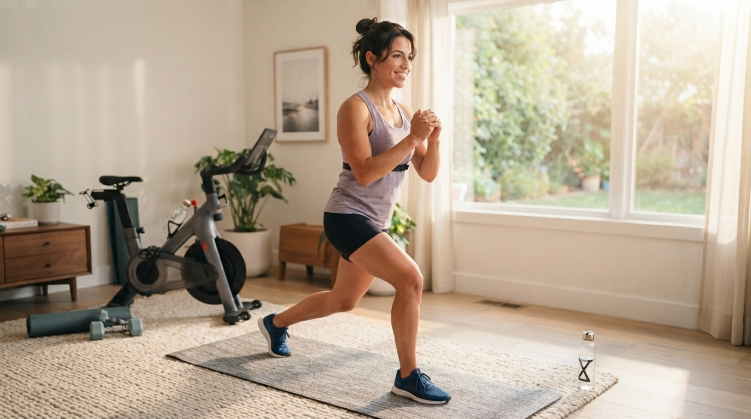
1. Brisk Walking Involves nothing more than a comfortable pace walk pushed slightly harder than casual strolling. Suits nearly everyone, including complete beginners. Duration: 20 to 45 minutes. Intensity option: add hills or a weighted vest for progression. Why choose it: zero learning curve, accessible almost anywhere.
2. Stationary Cycling A seated or upright bike session at a steady, moderate pace. Suits people with knee sensitivity since the movement is smooth and controlled. Duration: 20 to 40 minutes. Intensity option: increase resistance rather than speed to build strength alongside cardio. Why choose it: fully adjustable resistance makes it easy to match to any fitness level.
3. Swimming Full body movement through water that removes joint impact almost entirely. Suits people with arthritis, past injuries, or pregnancy related exercise modifications, ideally with medical clearance. Duration: 20 to 30 minutes. Intensity option: alternate strokes or add interval laps. Why choose it: works the whole body while being extremely joint friendly.
4. Elliptical Training A gliding motion that mimics running without the impact of foot strikes. Suits people transitioning from running due to joint discomfort. Duration: 20 to 35 minutes. Intensity option: increase incline and resistance simultaneously. Why choose it: closest low impact substitute to a running style cardio session. Also read Strength Training Frequency Per Week: Finding the Number That Actually Fits Your Life.
Joint Conscious Options
5. Water Aerobics Structured movement classes performed in a pool, often set to music. Suits older adults and those seeking a social, guided format. Duration: 30 to 45 minutes. Intensity option: increase movement speed and resistance through the water. Why choose it: buoyancy significantly reduces joint loading while resistance from water still builds effort.
6. Recumbent Cycling A reclined cycling position that reduces lower back and hip strain compared to upright bikes. Suits people with lower back sensitivity. Duration: 20 to 40 minutes. Intensity option: adjust resistance level gradually. Why choose it: excellent option for those who find upright cycling uncomfortable.
7. Rowing Machine (Moderate Pace) A full body pulling and pushing motion performed at a controlled, steady pace. Suits people wanting a strength and cardio hybrid. Duration: 15 to 25 minutes. Intensity option: increase stroke rate while maintaining form. Why choose it: engages the back, legs, and core alongside the cardiovascular system.
At Home Options
8. Step Touch Cardio Simple side to side stepping patterns, sometimes combined with light arm movement. Suits beginners exercising in small spaces. Duration: 15 to 25 minutes. Intensity option: add larger ranges of motion or light hand weights. Why choose it: requires no equipment and minimal space.
9. Marching in Place with Arm Drives Exaggerated marching combined with pumping arm movements to raise heart rate. Suits complete beginners and those easing back into exercise. Duration: 10 to 20 minutes. Intensity option: increase knee height and pace. Why choose it: an accessible entry point for home cardio with no equipment required.
Higher Intensity but Still Low Impact
10. Low Impact HIIT Interval based training using low impact movements such as squat pulses, standing mountain climbers, and step back lunges performed at high effort with short rest periods. Suits people wanting intensity without jumping. Duration: 15 to 25 minutes total. Intensity option: adjust work to rest ratios, such as 40 seconds work and 20 seconds rest. Why choose it: delivers a demanding cardiovascular stimulus while remaining joint friendly.
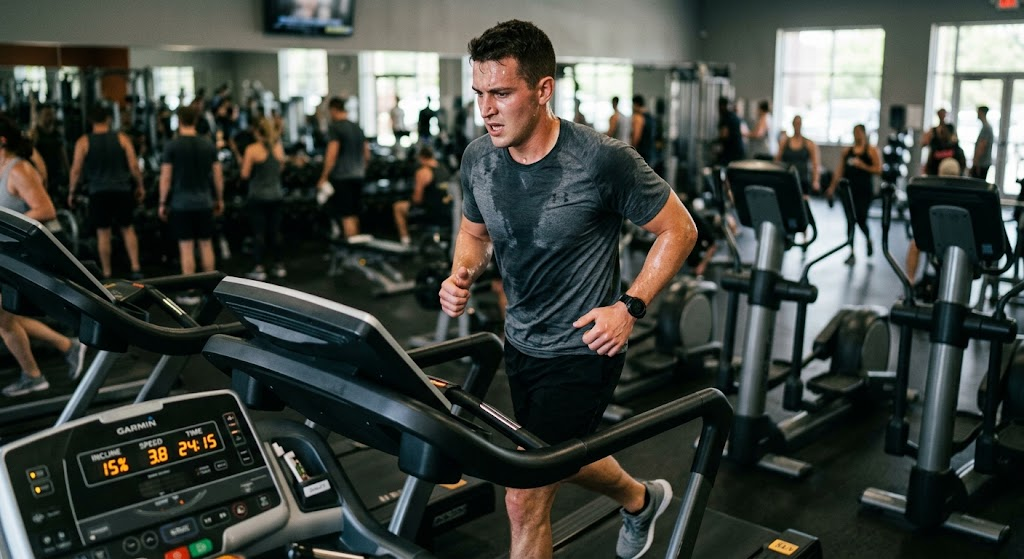
11. Incline Treadmill Walking Walking at a steep incline, sometimes called “rucking” when weighted, significantly raises heart rate without running. Suits people wanting a harder session without impact. Duration: 20 to 35 minutes. Intensity option: increase incline percentage before increasing speed. Why choose it: one of the most underrated ways to raise intensity while staying low impact.
12. Shadow Boxing Rhythmic punching combinations performed without a bag or partner, often at a brisk, sustained pace. Suits people wanting a dynamic, engaging workout. Duration: 15 to 25 minutes. Intensity option: increase combination speed and add footwork. Why choose it: builds coordination and cardiovascular effort simultaneously.
A Sample Weekly Schedule
- Monday: Brisk walk, 30 minutes
- Tuesday: Low impact HIIT, 20 minutes
- Wednesday: Rest or light stretching
- Thursday: Stationary cycling, 30 minutes
- Friday: Shadow boxing, 20 minutes
- Saturday: Swimming or water aerobics, 30 minutes
- Sunday: Rest
Real World Example
Cardiac rehabilitation programs, which help patients recovering from heart related events return to safe activity, frequently rely on low impact modalities such as walking, stationary cycling, and recumbent equipment as the foundation of supervised exercise.
These programs are built specifically around raising cardiovascular capacity while minimizing joint and orthopedic stress, which reflects the same principle behind general low impact cardio training for the everyday exerciser.
FAQs
What counts as a low impact cardio workout?
A low impact cardio workout is any aerobic exercise where at least one foot stays on the ground at all times, reducing stress on joints compared to running or jumping based activities.
Do low impact cardio workouts burn as many calories as running?
Calorie expenditure depends primarily on intensity and duration rather than impact level. A vigorous low impact session, such as incline walking or low impact HIIT, can burn a comparable amount to moderate running.
Are low impact cardio workouts good for beginners?
Yes. Many low impact options, such as brisk walking and stationary cycling, are ideal starting points because they are accessible and carry a lower injury risk while you build a fitness base.
Can low impact cardio workouts help with weight management?
Consistent low impact cardio, combined with overall activity levels and diet, can support calorie expenditure and contribute to weight management goals over time.
How often should I do low impact cardio workouts each week?
Most people benefit from three to five sessions per week, mixing lower and higher intensity options depending on recovery and fitness level.
What is the best low impact cardio workout for joint pain?
Swimming and water aerobics are generally considered among the most joint friendly options because water buoyancy significantly reduces load on the joints.
Is low impact HIIT actually effective for cardiovascular fitness?
Yes. Low impact HIIT can elevate heart rate significantly through work and rest interval structuring, making it an effective option for those seeking intensity without high impact movement.
Conclusion
Low impact cardio workouts give you a genuinely wide range of options, from gentle beginner sessions to demanding interval training, all while keeping your joints out of the equation.
The key is matching the workout to your current fitness level and goals rather than assuming low impact automatically means low effort. Pick two or three options from this list, build them into a weekly rhythm, and adjust intensity as your fitness improves.