
You don’t need a gym membership to start strength training. What you actually need is a plan that makes sense, a bit of open floor space, and consistency over a few weeks. This guide walks through everything required for strength training for beginners at home, then gives you a realistic four week plan to follow.
Who This Is For
This approach works well if you’re new to structured exercise, uncomfortable in a gym environment, short on time, or simply prefer training in familiar surroundings. It’s also a practical starting point if you’re easing back into fitness after a break.
If you have an existing injury, a chronic health condition, or you’re pregnant, it’s worth checking with a healthcare professional before starting any new exercise routine, just to make sure the plan fits your specific situation. Also read The Ultimate Guide to Strength Training Workouts among Women.
What Equipment You Actually Need
Here’s the good news: almost none of it is required.
- Bodyweight only is genuinely enough to start strength training for beginners at home. Squats, push ups, lunges, and planks build real strength without any equipment at all.
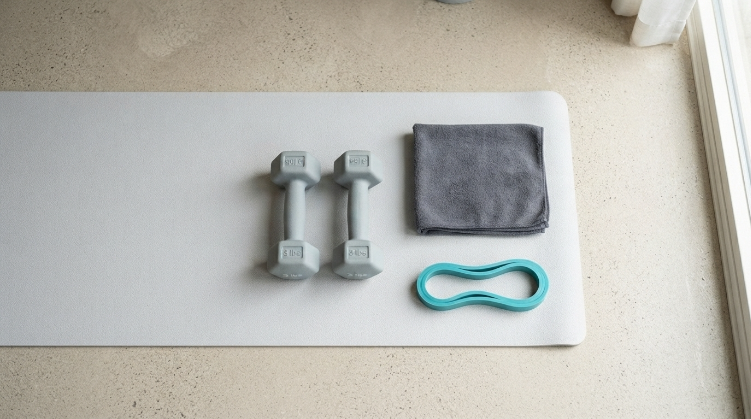
- A pair of dumbbells, even light ones, adds versatility once bodyweight exercises start feeling too easy.
- Resistance bands are inexpensive, portable, and useful for adding tension to movements like rows and presses.
- A sturdy chair or low bench can double as equipment for step ups or elevated push ups.
None of this needs to be expensive. A resistance band or a single pair of adjustable dumbbells covers most of what a beginner program requires.
Warming Up Before You Start

Spend five to eight minutes warming up before each session. This might include marching in place, bodyweight squats without added resistance, arm circles, and a few gentle hip stretches. The goal is simply raising your body temperature and preparing joints for movement, not exhausting yourself before the real workout begins. Also read Strength Training Frequency Per Week: Finding the Number That Actually Fits Your Life.
Understanding Sets, Reps, and Rest at Home
For beginners, a common and effective structure is 2 to 3 sets of 8 to 15 reps per exercise, with 60 to 90 seconds of rest between sets. This range builds strength while keeping fatigue manageable, especially important when you’re still learning proper form for each movement.
Applying Progressive Overload at Home
Just because you’re training without a gym doesn’t mean you skip progressive overload training. It simply looks a little different:
- Increase reps before increasing difficulty of the exercise itself.
- Slow down the tempo of each rep to increase time under tension.
- Progress to a harder variation, like moving from a knee push up to a standard push up.
- Add resistance with dumbbells or bands once bodyweight versions feel too easy.
- Increase total sets once your current volume feels comfortable.
When I break this down for someone just starting out, I always emphasize that home training can absolutely build real strength, as long as the same progression principles are applied consistently over time.
Common Beginner Mistakes at Home
- Skipping a warm up because there’s no gym atmosphere pushing you to prepare properly.
- Doing too much too soon, which often leads to excessive soreness and skipped sessions afterward.
- Never progressing the exercises, staying at the exact same difficulty for months.
- Training in a cluttered space, increasing the risk of trips or awkward movement patterns.
- Ignoring rest days, assuming more frequent home sessions always means faster results.
The 4 Week Beginner Home Strength Plan
This plan uses three sessions per week with rest or light activity on other days. Each week slightly increases difficulty, reps, or exercise progression compared to the last.
Week 1: Building the Foundation
- Bodyweight squats: 2 sets of 10
- Knee push ups: 2 sets of 8
- Glute bridges: 2 sets of 12
- Standing dumbbell or bodyweight rows (bent over): 2 sets of 10
- Plank hold: 2 sets of 15 to 20 seconds
Focus entirely on learning correct form. Speed and difficulty aren’t priorities this week.
Week 2: Adding Volume
- Bodyweight squats: 3 sets of 10
- Knee push ups: 3 sets of 8
- Glute bridges: 3 sets of 12
- Bent over rows: 3 sets of 10
- Plank hold: 2 sets of 25 to 30 seconds
The structure stays familiar, but total volume increases as your body adapts to the movement patterns.
Week 3: Increasing Difficulty
- Bodyweight squats: 3 sets of 15
- Standard push ups (or knee push ups with more reps): 3 sets of 10
- Reverse lunges: 2 sets of 10 per leg
- Dumbbell or band rows: 3 sets of 12
- Plank hold: 2 sets of 35 to 40 seconds
Introduce a small progression, like a harder push up variation or an added lunge pattern, once earlier weeks feel manageable.
Week 4: Consolidating Progress
- Dumbbell or bodyweight squats: 3 sets of 15
- Standard push ups: 3 sets of 12
- Reverse lunges: 3 sets of 10 per leg
- Dumbbell or band rows: 3 sets of 12
- Plank hold: 2 sets of 45 seconds
By this point, most beginners notice better control, more confidence in their movement, and the ability to complete sessions with less fatigue than in week one.
This plan doesn’t promise a specific amount of muscle gain or weight loss, since results vary depending on nutrition, consistency, sleep, and individual factors. What it does offer is a structured, sustainable starting point.
Recovery Matters Just as Much at Home
Rest days aren’t wasted days. Muscle tissue rebuilds and adapts during recovery, not during the workout itself. Aim for at least one full rest day between sessions targeting the same muscle groups, and prioritize sleep, since it plays a major role in how well your body recovers and adapts to new training demands.
Real World Example
Picture a hypothetical beginner working from home with limited time between meetings. They start with the week one plan above, using nothing but bodyweight exercises in their living room.
By week four, they’re performing standard push ups instead of knee push ups, holding a plank three times longer than their starting point, and noticing that daily tasks like carrying groceries upstairs feel noticeably easier.
Nothing about this required a gym membership, just a consistent four week structure and gradual progression. This mirrors the general principle behind effective strength training frequency per week, where consistency across manageable sessions outperforms sporadic, overly ambitious training.
Conclusion
Strength training for beginners at home doesn’t require fancy equipment or a gym membership, just a sensible plan and the willingness to show up consistently. Follow the four week structure above, focus on form before difficulty, and let gradual progression do its job.
Once these weeks are behind you, you’ll have a solid foundation to keep building on, whether you stay home or eventually move into a gym setting.
FAQs
Is strength training for beginners at home actually effective without equipment?
Yes. Bodyweight exercises like squats, push ups, and lunges can build meaningful strength, especially for beginners, as long as progression is applied consistently over time.
How many days a week should a beginner train at home?
Three sessions per week, with rest days in between, works well for most beginners starting a home strength training routine.
What equipment is worth buying for home strength training?
A pair of adjustable dumbbells and a resistance band cover most beginner needs without a large investment.
How long should a beginner home workout last?
Around 30 to 40 minutes, including warm up, is typically enough for a focused beginner session.
Can I build muscle with strength training for beginners at home?
Yes, particularly in the early stages, though progress depends on consistency, nutrition, recovery, and gradually increasing training difficulty over time.
What if an exercise feels too hard in the beginner plan?
Modify it. Use an easier variation, like knee push ups instead of standard push ups, and progress once it feels manageable.
Do I need a lot of space to strength train at home?
No. A space roughly the size of a yoga mat is enough for most bodyweight and dumbbell based exercises.
Image Prompts and SEO Alt Text
SEO Alt Text: Beginner performing a bodyweight squat during a home strength training session.
SEO Alt Text: Beginner performing a modified push up as part of a home workout plan.
SEO Alt Text: Basic home workout equipment including dumbbells and a resistance band.